
Position:Home >
Atrial Fibrillation (AF) Model Induced by Electrical Stimulation
Atrial Fibrillation (AF) Model Induced by Electrical Stimulation
Background
Atrial fibrillation (AF) is a common cardiac arrhythmia. To investigate its pathogenesis and therapeutic approaches, establishing appropriate animal models of atrial fibrillation is crucial.
Rapid atrial pacing can induce electrical remodeling and structural remodeling in the myocardium, leading to atrial fibrillation, making it the most widely used method at present.
Depending on experimental goals, electrodes can be placed at the atrial appendage, nerves, pulmonary veins, or other sites; pacing can be performed either at a single site or combined across multiple locations.
Rapid atrial pacing allows the establishment of both acute and chronic atrial fibrillation models, with the former involving fewer pacing control variables.
Acute AF models typically use pacing durations ranging from several hours to 24 hours, and are commonly used to evaluate short-term effects such as myocardial electrical remodeling, multi-site stimulation pacing, and nerve ablation.
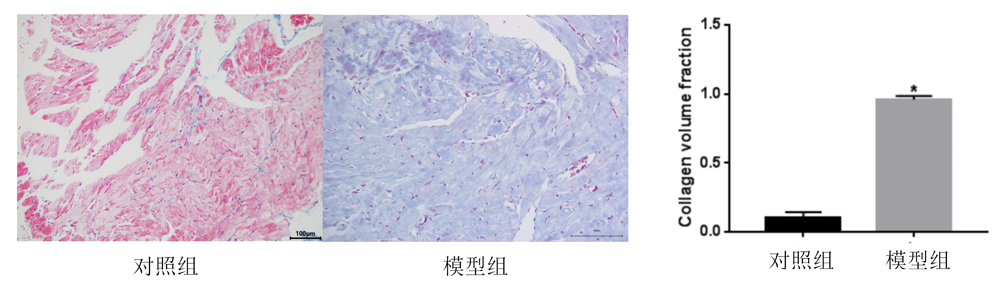
Chronic AF models require long-term stimulation, lasting from days to months, and are often applied to study structural and functional changes in the myocardium, chronic fibrosis, fatty infiltration, chronic neural influences, and long-term effects of pharmacological interventions.
Materials and methods
- **Animals**: Male SD rats, 8 weeks old
- **Model establishment**: Atrial fibrillation model was established by rapid atrial pacing via esophageal electrode.
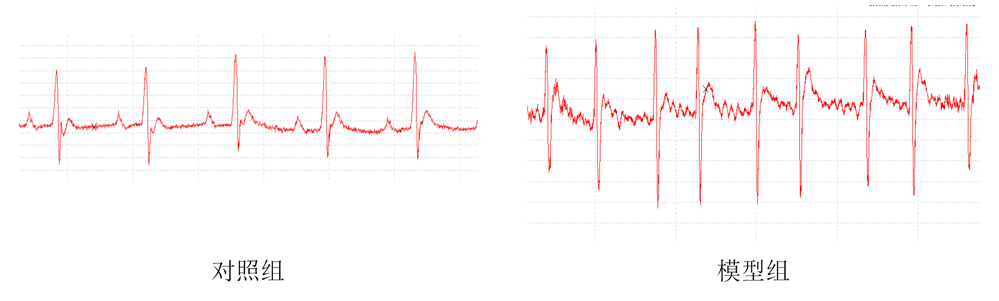
- **Evaluation indexes**: Electrocardiogram (ECG), Masson staining
- **Model establishment**: Atrial fibrillation model was established by rapid atrial pacing via esophageal electrode.
- **Evaluation indexes**: Electrocardiogram (ECG), Masson staining
Test and verify
**Electrocardiogram (ECG)**
**Myocardial tissue Masson staining**