
Position:Home >
Lung Ischemia Reperfusion, I/R
Lung Ischemia Reperfusion, I/R 购买
Background
Pulmonary ischemia-reperfusion injury (PIRI) refers to the rapid damage to lung tissue caused by ischemia-reperfusion of tissues or organs in the body. Ischemia-reperfusion may occur in the lungs themselves, or in other parts such as the lower extremities or abdominal aorta, which leads to damage of alveolar epithelial cells and pulmonary capillary endothelial cells. The possible causes are related to pathophysiological reactions such as tissue inflammatory cell aggregation, reactive oxygen species (ROS) production, and pro-inflammatory cytokine release. The pulmonary ischemia-reperfusion injury model established by ligation is the most commonly used method, which is characterized by simple operation, high success rate and strong practicality. It is crucial for studying the pathogenesis, prevention, treatment and protection of pulmonary ischemia-reperfusion injury.
Materials and methods
SD rats (male, 6-8 weeks old)
The left pulmonary hilum (including arteries, veins, and left main bronchus) was occluded with a vascular clamp for a period of time, then the clamp was released to allow blood reperfusion, so as to establish a pulmonary ischemia-reperfusion model.
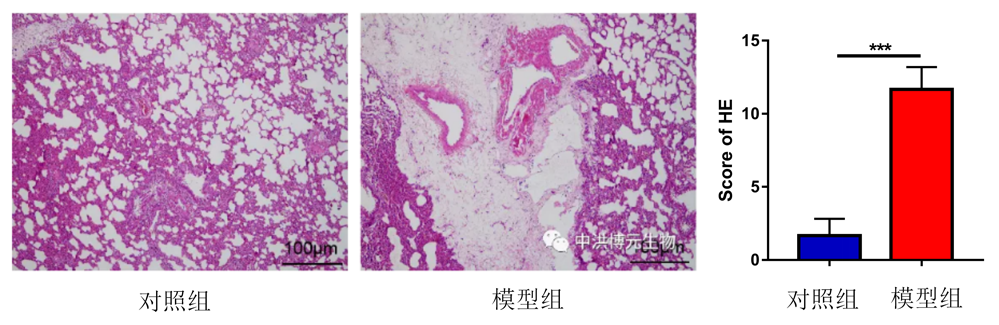
Evaluation indicators: serum biochemical detection, HE staining, and staining score.
The left pulmonary hilum (including arteries, veins, and left main bronchus) was occluded with a vascular clamp for a period of time, then the clamp was released to allow blood reperfusion, so as to establish a pulmonary ischemia-reperfusion model.
Evaluation indicators: serum biochemical detection, HE staining, and staining score.
Test and verify
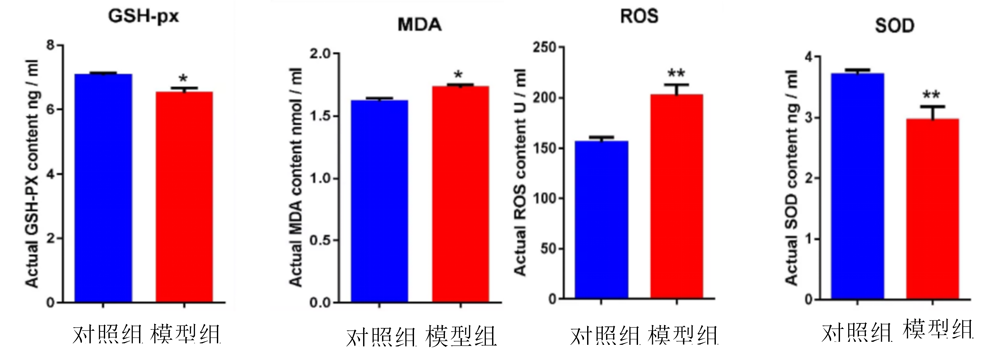
Serum biochemical detection
HE staining of lung tissue