
Position:Home >
Nylon brush–induced tracheal stenosis model
Nylon brush–induced tracheal stenosis model
Background
Tracheal stenosis refers to deformity and narrowing of the laryngotracheal lumen caused by injury or loss of laryngotracheal soft tissue and cartilaginous support structures.
It can be divided into congenital and acquired forms. The most common causes of acquired laryngotracheal stenosis include trauma, iatrogenic injury, and benign or malignant laryngotracheal tumors.
Its pathogenesis mainly involves damage to the laryngotracheal mucosa during trauma, surgery or intubation, triggering an acute inflammatory response that leads to granulation tissue formation and eventual scarring.
Establishing an experimental animal model of granulation tissue hyperplastic tracheal stenosis using rigid nylon brush brushing can simulate the full pathophysiological process from tracheotomy to tracheal stenosis caused by granulation tissue proliferation, closely resembling clinical conditions.
This method offers advantages including simple operation, high success rate, short modeling period, low cost and good reproducibility, providing a reliable animal model foundation for exploring the mechanisms and treatments of benign tracheal stenosis.
Materials and methods
Animals: Japanese big-ear rabbits, male or female, 2.5 kg
Model establishment: Trachea was incised, and the tracheal wall was brushed back and forth with a rigid nylon brush. The model was successfully established 10 days after surgery.
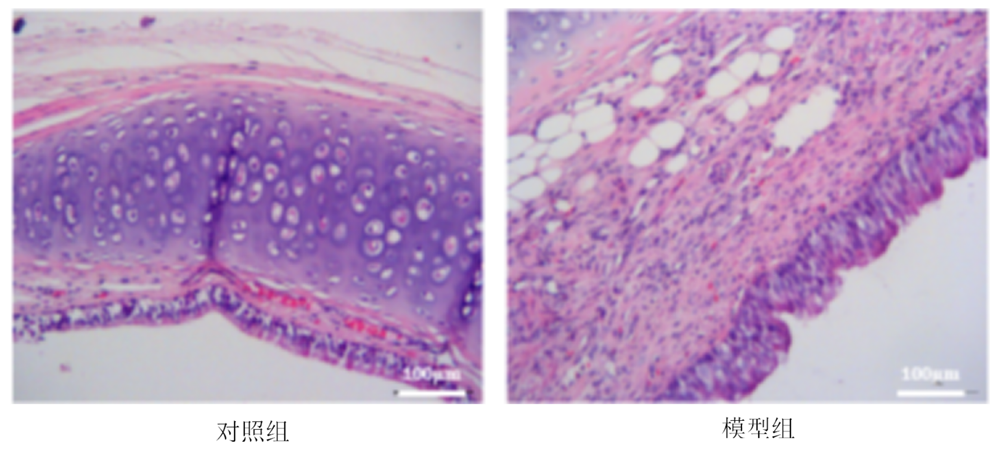
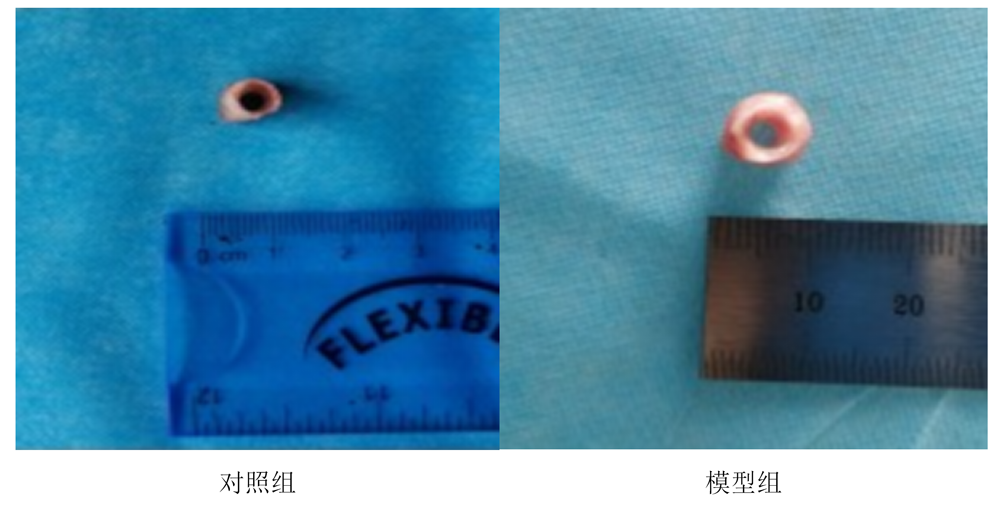
Evaluation indexes: Gross observation, H&E staining
Model establishment: Trachea was incised, and the tracheal wall was brushed back and forth with a rigid nylon brush. The model was successfully established 10 days after surgery.
Evaluation indexes: Gross observation, H&E staining
Test and verify
大体观察
气管组织HE染色