
Position:Home >
Adenine-induced chronic renal failure model
Adenine-induced chronic renal failure model
Background
Chronic renal failure (CRF) is a clinical syndrome characterized by progressive and irreversible renal parenchymal damage caused by various etiologies, leading to significant renal atrophy and loss of basic renal function.
Clinically, it manifests mainly as retention of metabolic wastes, disturbances of water, electrolyte and acid-base balance, and systemic complications.
In this model, adenine is administered by gavage.
Under the action of xanthine oxidase, high concentrations of adenine are metabolized in the liver to form **2,8-dihydroxyadenine**, which is poorly soluble in water.
This metabolite is filtered by the glomeruli and deposited in renal tubules, causing tubular obstruction.
Consequently, excretion of nitrogenous compounds is impaired, resulting in toxin accumulation, electrolyte disturbances, and eventually renal failure.
Materials and methods
- **Animals**: Male SD rats, weighing 300–350 g
- **Model establishment**: Adenine was administered by gavage for 4 weeks to induce a chronic renal failure model.
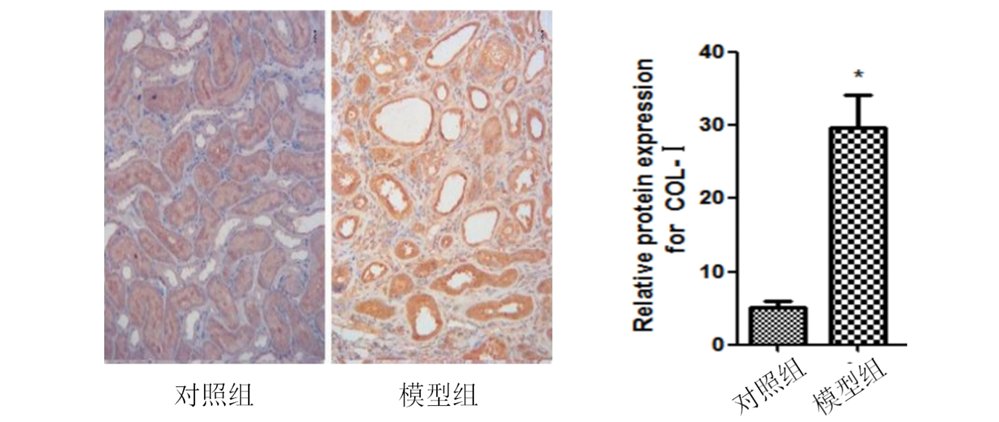
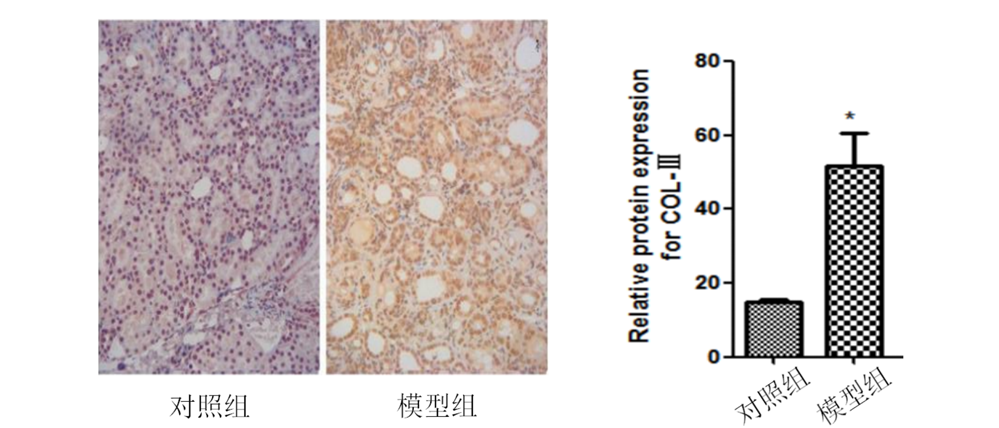
- **Evaluation indexes**: Gross observation, HE staining, immunohistochemistry (COL-I, COL-III)
- **Model establishment**: Adenine was administered by gavage for 4 weeks to induce a chronic renal failure model.
- **Evaluation indexes**: Gross observation, HE staining, immunohistochemistry (COL-I, COL-III)
Test and verify
Gross observation

Renal tissue HE staining

Renal tissue immunohistochemistry