

Position:Home >
Renal ischemia-reperfusion (I/R) model
Renal ischemia-reperfusion (I/R) model
Background
Renal ischemia-reperfusion injury (IRI) refers to acute renal damage induced by pathological insults such as ischemia and hypoxia, shock, disseminated intravascular coagulation, and systemic inflammatory response syndrome.
It commonly occurs in renal transplantation, severe trauma, partial nephrectomy, renal artery thromboembolism, and sepsis.
Renal IRI during kidney transplantation remains a critical challenge to be addressed.
Early clinical manifestations include acute kidney injury, in which damaged renal tubular epithelial cells typically lead to abnormal accumulation of metabolites, water-electrolyte imbalance, edema, hypertension, and hemorrhage.
If IRI is not promptly reversed, it can cause chronic inflammation and hypoxia, followed by epithelial-mesenchymal transition and abnormal extracellular matrix deposition, ultimately resulting in renal fibrosis.
Materials and methods
- **Animals**: Male BALB/c mice, 6 weeks old
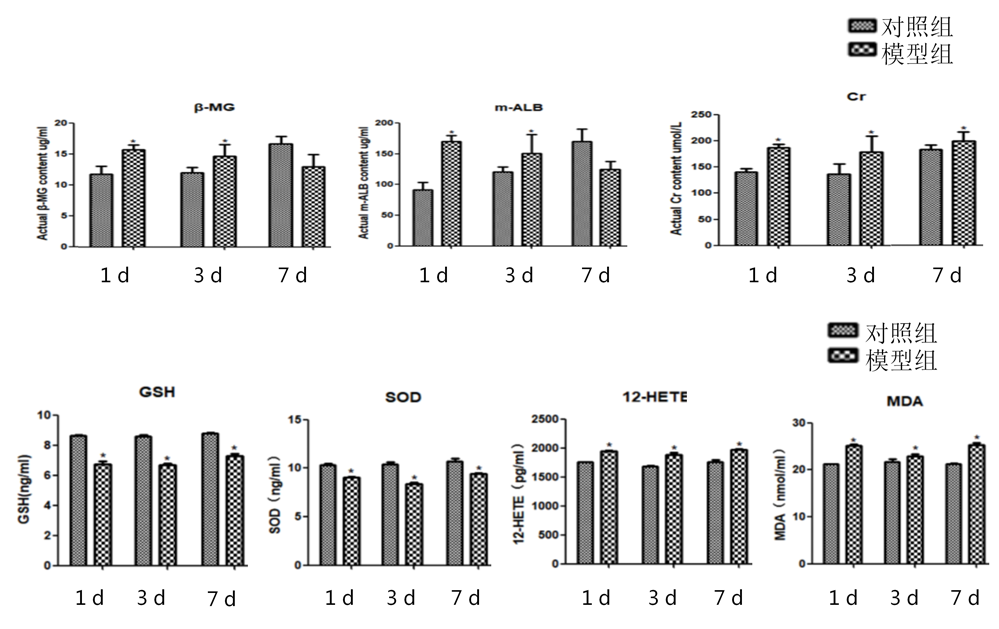
- **Model establishment**: Bilateral renal pedicles were clamped with microvascular clamps for 45 min, then the left clamp was released for reperfusion. Samples were collected at 1 d, 3 d, and 7 d after reperfusion.
- **Evaluation indexes**: ELISA (urine and tissue), HE staining
- **Model establishment**: Bilateral renal pedicles were clamped with microvascular clamps for 45 min, then the left clamp was released for reperfusion. Samples were collected at 1 d, 3 d, and 7 d after reperfusion.
- **Evaluation indexes**: ELISA (urine and tissue), HE staining
Test and verify
ELISA (urine and tissue samples)
Renal tissue HE staining


