
Position:Home >
Vasectomy model established by bilateral vas deferens transection and ligation
Vasectomy model established by bilateral vas deferens transection and ligation
Background
Vasectomy is a commonly used clinical method for male sterilization. It is widely recognized in clinical practice as one of the easiest, safest, and most effective procedures for male contraception.
Studies have confirmed that within 1 to 20 years after vasectomy, there is no significant difference in testosterone levels between men who underwent the procedure and age-matched men who did not.
In summary, this surgical method does not cause physical harm to males. Furthermore, with the development of minimally invasive techniques and advances in clinical research, individuals who have undergone vasectomy can undergo vasovasostomy to restore fertility if necessary.
Materials and methods
- **Animals**: Male SD rats, weighing 180–220 g
- **Model establishment**: The bilateral vas deferens were transected obliquely, and both stumps were ligated with silk thread. The vasectomy model was successfully established after 3 months.
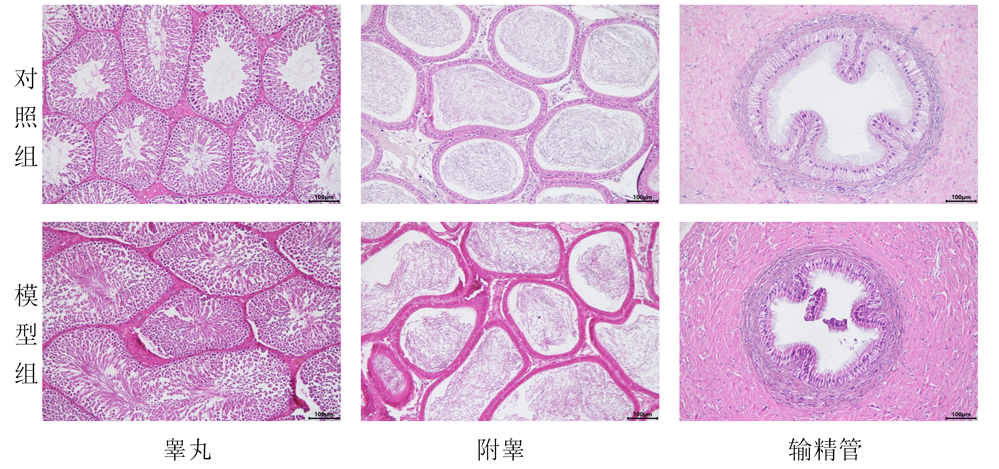
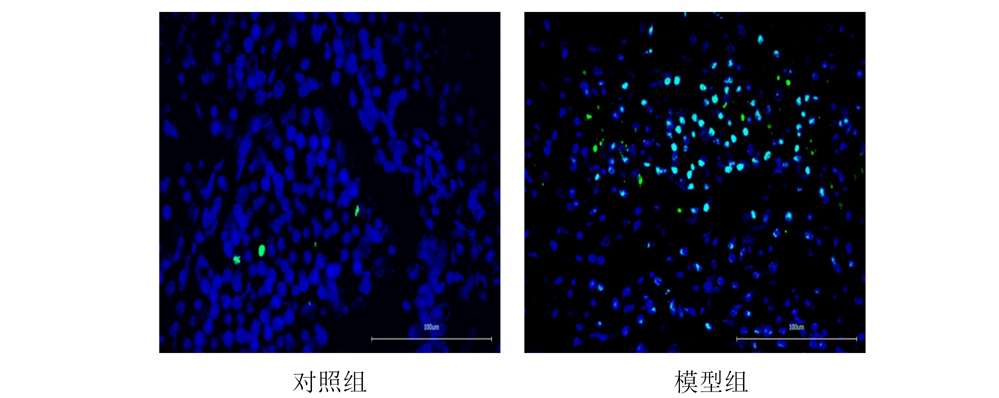
- **Evaluation indexes**: TUNEL staining, HE staining
- **Model establishment**: The bilateral vas deferens were transected obliquely, and both stumps were ligated with silk thread. The vasectomy model was successfully established after 3 months.
- **Evaluation indexes**: TUNEL staining, HE staining
Test and verify
Testicular tissue TUNEL staining
HE staining (testis, epididymis, vas deferens)