
Position:Home >
AOM/DSS-induced colon cancer model
AOM/DSS-induced colon cancer model
Background
Colorectal cancer (CRC) is the third most common cancer worldwide, accounting for 10.2% of the incidence and 9.2% of the mortality among the 10 most common cancer types.
Current clinical, morphological and pathological observations of colorectal cancer have confirmed that the azoxymethane/dextran sulfate sodium (AOM/DSS) model closely resembles the carcinogenic process of human ulcerative colitis.
Guanine methylation induced by AOM is the major cause of mutagenic DNA damage.
Gene mutations lead to excessive cell proliferation and the formation of specific colorectal tumors.
The inflammatory mechanism of DSS remains unclear; it may be related to its negative charge affecting DNA synthesis, inhibiting epithelial cell proliferation, disrupting the intestinal mucosal barrier, causing macrophage dysfunction, and disturbing intestinal flora.
Materials and methods
- **Animals**: Male C57BL/6 mice, 4–5 weeks old
- **Model establishment**: A single intraperitoneal injection of AOM was administered, followed by one week of normal drinking water. Mice were then given DSS-containing water for one week, followed by two weeks of normal water, constituting one cycle. Three consecutive cycles were performed to successfully establish the colon cancer model.
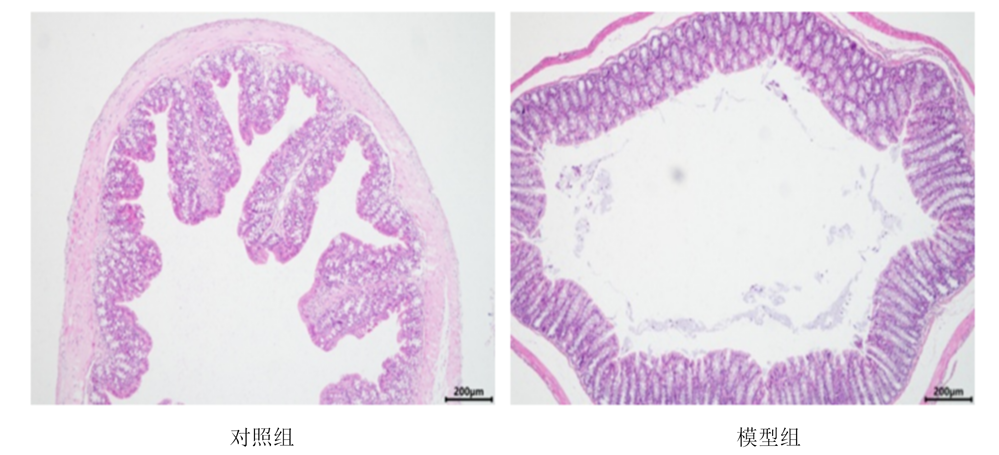
- **Evaluation indexes**: Gross observation, HE staining
- **Model establishment**: A single intraperitoneal injection of AOM was administered, followed by one week of normal drinking water. Mice were then given DSS-containing water for one week, followed by two weeks of normal water, constituting one cycle. Three consecutive cycles were performed to successfully establish the colon cancer model.
- **Evaluation indexes**: Gross observation, HE staining
Test and verify
Gross observation of the colon

Colon tissue HE staining