

Position:Home >
Myocardial ischemia-reperfusion model
Myocardial ischemia-reperfusion model
Background
Myocardial ischemia leads to irreversible necrosis of cardiomyocytes, known as myocardial infarction. As terminally differentiated cells, extensive myocardial infarction causes severe cardiac dysfunction and can be life‑threatening.
Timely restoration of blood perfusion to ischemic myocardial tissue — reperfusion — is the only effective treatment for acute myocardial infarction.
However, reperfusion of ischemic myocardium can result in more severe myocardial injury than ischemia alone of the same duration. This paradoxical phenomenon is called reperfusion injury.
In recent years, the widespread use of emergency PCI has significantly reduced mortality in patients with acute myocardial infarction.
Nevertheless, reperfusion injury after PCI, which leads to expansion of infarct size and progressive ventricular remodeling, still severely impairs quality of life and increases long‑term mortality.
It is therefore of great importance to further investigate the mechanisms of myocardial ischemia‑reperfusion injury, identify cardioprotective targets, and develop innovative cardioprotective strategies.
Materials and methods
- **Animals**: Male Wistar rats, 180–220 g
- **Model establishment**: The left anterior descending coronary artery (LAD) was ligated for 45 minutes followed by reperfusion to establish the myocardial ischemia-reperfusion model.
- **Evaluation indexes**: TTC staining, H&E staining
- **Model establishment**: The left anterior descending coronary artery (LAD) was ligated for 45 minutes followed by reperfusion to establish the myocardial ischemia-reperfusion model.
- **Evaluation indexes**: TTC staining, H&E staining
Test and verify
TTC staining
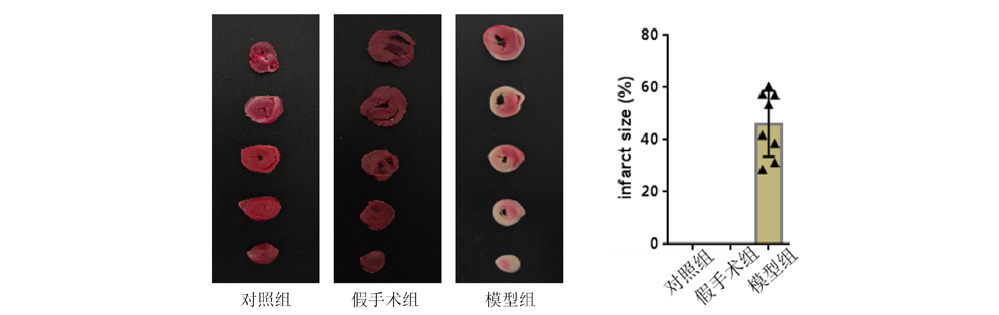
Myocardial tissue H&E staining


