
Position:Home >
Hyperprolactinemia Model
Hyperprolactinemia Model
Background
Hyperprolactinemia is a condition characterized by persistently elevated peripheral blood prolactin levels above normal ranges due to various causes. It is marked by endocrine dysfunction within the hypothalamic-pituitary-gonadal axis and predominantly affects female patients. Clinical manifestations primarily include menstrual irregularities and infertility, breast enlargement, galactorrhea, reduced bone density, as well as symptoms of anterior pituitary adenoma compression such as headaches an
Materials and methods
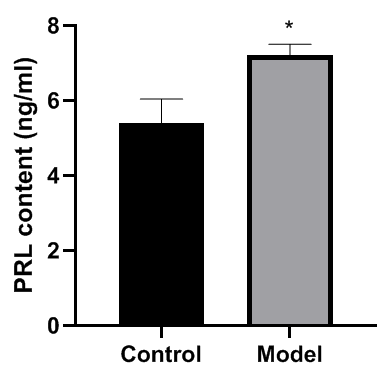
Molding Method: Evaluation Indicator: Serum PRL
Experimental animals: SD rats, female, 6 weeks old, 200–220 g
Housing: SPF environment, standard housing conditions, no special dietary requirements.
Pre-molding treatment: The experiment can commence after one week of acclimation.
Molding Process: In addition to the control group, the model group received subcutaneous injections of methoxapramine hydrochloride (a dopamine receptor antagonist) once daily for 10 consecutive days.
Post-mo
Experimental animals: SD rats, female, 6 weeks old, 200–220 g
Housing: SPF environment, standard housing conditions, no special dietary requirements.
Pre-molding treatment: The experiment can commence after one week of acclimation.
Molding Process: In addition to the control group, the model group received subcutaneous injections of methoxapramine hydrochloride (a dopamine receptor antagonist) once daily for 10 consecutive days.
Post-mo
Test and verify
血清ELISA